Ireland's housing crisis: what the 2026 rental reforms change
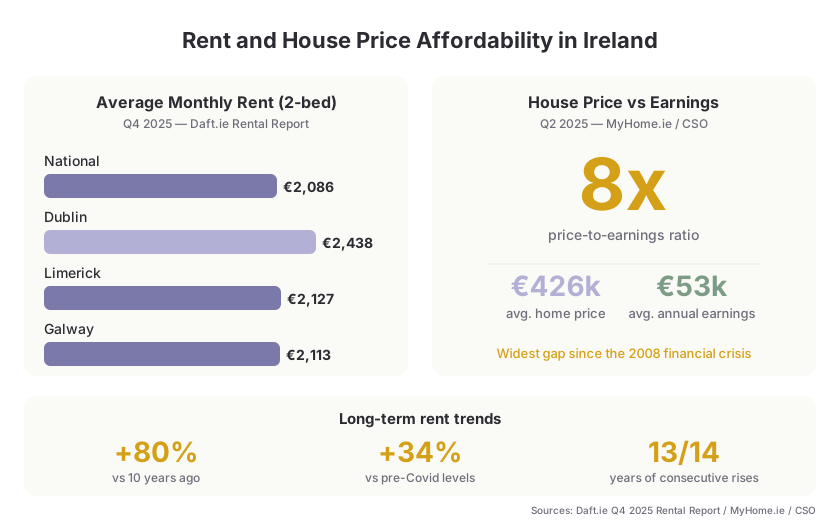
The average home in Ireland now costs eight times the average salary. Rent on a two-bed apartment runs €2,086 a month nationwide, and €2,438 in Dublin. These numbers have risen in 13 of the last 14 years, and the supply of rental homes just hit its lowest level since records began.
This is not a temporary spike. It is the result of more than a decade of undersupply, with demand consistently outrunning the homes available.
In March 2026, the government responded with the most significant rental reform in a generation. Whether it will be enough depends on what you mean by "enough."
The price of staying
To understand how deep the problem runs, start with what it actually costs to keep a roof over your head.
According to the latest Daft.ie rental report, authored by economist Ronan Lyons at Trinity College Dublin:
- Average rent for a two-bed apartment: €2,086 per month nationwide
- Dublin two-bed: €2,438 per month, with city-centre properties approaching €2,700
- Galway: up 11.4% year on year
- Cork: up 7.5%
- Waterford: up 6.9%
- Limerick: up 5%
Market rents now sit 34% above pre-Covid levels and nearly 80% higher than a decade ago. On 1 February 2026, fewer than 1,800 homes were listed to rent nationwide, a 22% drop compared to the same date last year. In Dublin, listings fell by more than a third.
If renting is unaffordable, buying is no escape. The average home costs €426,000, the widest affordability gap since the 2008 financial crisis. One in five homes sold in Q3 2025 went for 20% above the asking price. Outside Dublin, supply is even tighter, pushing regional price growth to 6.2% year on year versus 4.8% in the capital.
A generation ago, a single income could buy a family home. Today, a deposit of €42,600 requires years of saving, especially when rent is consuming most of your income. Knowing the real numbers for your area is the first step toward making a plan that works within them.
How policy created this
These prices did not appear overnight. They are the product of a supply crisis that has been building for over a decade.
Ireland built around 7,000 council houses a year in the 1970s. By 2015, that number had fallen to fewer than 500. Over the same period, social housing support shifted toward the Housing Assistance Payment (HAP) scheme, which subsidises rents in the private market rather than adding permanent public stock. The state is now one of the private rental market's biggest customers, which adds demand to an already supply-constrained market.
After the crash, the National Asset Management Agency (NAMA) sold tens of thousands of residential units to international investment funds at deep discounts. From 2013, Real Estate Investment Trusts were offered a 0% corporation tax rate on rental income, inviting institutional investors to buy up housing stock at scale. The Help-to-Buy scheme, introduced as a demand-side subsidy into a supply-constrained market, did exactly what economists warned it would: inflate prices further.
Meanwhile, much development land sits unused. The Kenny Report recommended taxing it at agricultural value back in 1973. Over fifty years later, that recommendation remains unimplemented.
The result is a market shaped by decades of policy choices on supply, tax, and investment. The prices people face today reflect those choices as much as raw market forces.
The human cost
The consequences show up in emergency accommodation figures, in emigration data, and in the daily choices young people are forced to make.
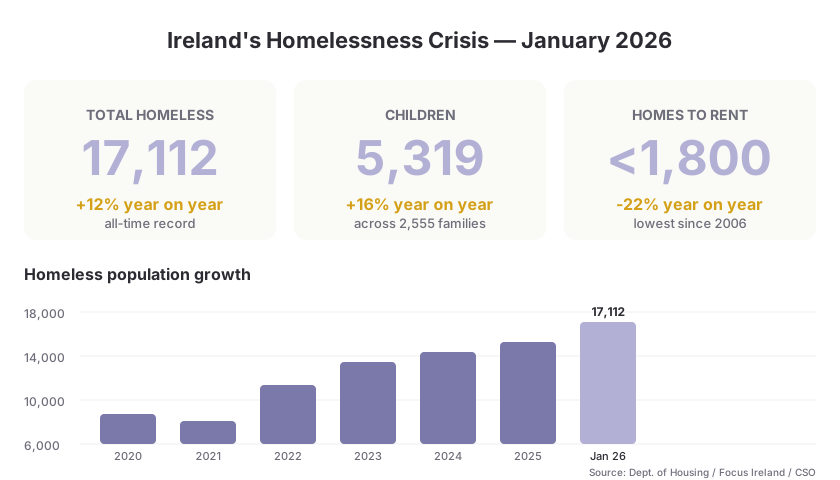
In January 2026, 17,112 people were living in emergency accommodation, an all-time record. That includes 5,319 children across 2,555 families. Year on year, that is a 12% increase in total numbers and an 18% rise in homeless families. Behind every one of those figures is a person or a family without a home of their own.
The National Youth Council of Ireland (NYCI) has tracked the wider toll. Three in five people under 25 are considering emigration, with almost one in three strongly considering leaving Ireland. Among 18 to 24 year olds, 82% say rising costs are negatively affecting them, and 84% agree the housing crisis hits their age group hardest. Over one in five young people have skipped meals because they cannot afford food.
As NYCI's Director of Policy and Advocacy Paul Gordon put it, the findings "underscore a generation for whom the basic social contract appears broken, with hard work no longer a guarantee of security."
When rent eats 50% or more of your income, everything else (food, health, savings, mental health) gets squeezed. Whether you stay or leave, clarity on your finances is what makes that decision yours to make, not one forced on you.
What actually changed on 1 March
It was against this backdrop that the Residential Tenancies (Miscellaneous Provisions) Act 2026 was signed into law on 24 February. It is the most significant rental reform in years, arriving after more than a decade in which rents doubled while rental supply fell.
Here is what it does:
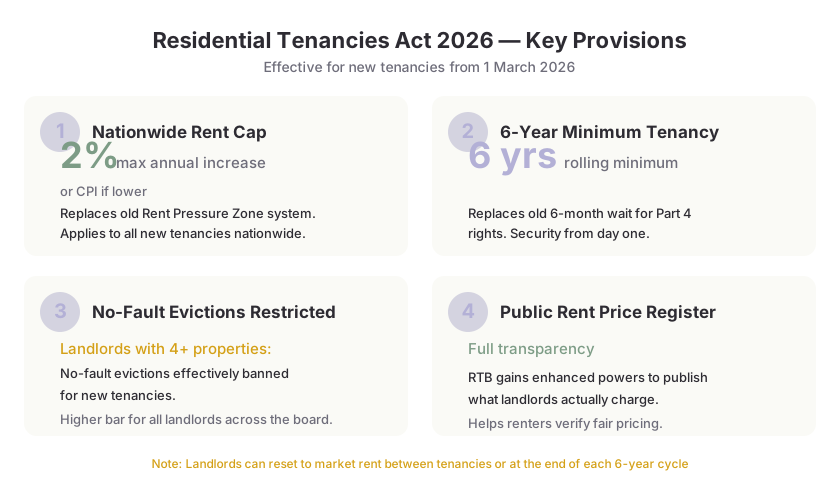
Rent controls go nationwide. The old Rent Pressure Zone system is gone. In its place, all new tenancies are capped at 2% annual rent increases, or the rate of CPI inflation if that is lower. This applies across the entire country.
Minimum tenancy of six years. New tenancies created from 1 March come with a rolling minimum duration of six years, replacing the old system where tenants had minimal security for the first six months before Part 4 protections kicked in.
No-fault evictions restricted. For landlords with four or more properties, no-fault evictions are effectively banned for new tenancies. Smaller landlords retain more flexibility, but the bar for eviction is higher across the board.
A new Rent Price Register. The Residential Tenancies Board (RTB) gains enhanced powers, including a public register of rents designed to bring transparency to what landlords are actually charging. If you are entering a new tenancy from March, the 2% cap applies to you, so verify your rent against the new RTB register.
There is a significant catch: landlords can reset rents to market rates between tenancies or at the end of each six-year cycle. Critics argue this creates an incentive to push tenants out so a new tenant can be charged the going rate.
The supply problem reform cannot fix
Professor Ronan Lyons noted that "widespread uncertainty about the new rent controls appears to have exacerbated ongoing supply shortages." Some landlords are withdrawing properties from the market entirely rather than operating under the new rules.
This is the core tension. Rent controls protect existing tenants, but they do nothing to create new homes. And Ireland's supply deficit, built up over decades of underbuilding and slow planning, is enormous.
The government's Delivering Homes, Building Communities plan targets 300,000 new homes by 2030, backed by €9 billion in public capital alongside private investment. A dedicated €100 million fund has been allocated to buy second-hand homes for families in emergency accommodation. These are serious commitments, though previous housing plans have often fallen short of their targets, so delivery is the real test.
Construction timelines are outside any individual household's control. What you can control, while supply catches up, is how well you understand and manage your own finances.
What this means for your money
Legislation can change the rules. It cannot, by itself, change your financial reality. That part starts with knowing where you actually stand.
If you are renting, the new 2% cap on annual increases offers real protection, but only for tenancies entered from March onwards. Existing tenancies continue under the old Rent Pressure Zone rules. Check with the RTB whether your tenancy qualifies.
If you are saving to buy, the affordability maths remain difficult. At eight times average earnings, the deposit alone requires years of disciplined saving, made harder when rent is consuming most of your income. Understanding your spending patterns month by month is how you find the margin that makes a plan possible, and finding a safe home for those savings with a decent return helps you reach your deposit quicker.
If you are a young person weighing whether to stay or go, you are far from alone. Sixty percent of under-25s are actively thinking about the same question. Whatever you decide, having a clear picture of your finances is what turns that into a choice you are making, not one being made for you.
If you or someone you know needs support, these organisations can help: Threshold (housing rights), MABS (money advice), Focus Ireland (homelessness support), SVP (financial assistance).
None of this is easy, and no app fixes a housing crisis. But when housing takes this large a share of your income, knowing exactly where the rest of your money goes matters more, not less.
Cozzy helps you see exactly where your money goes each month, which matters most when rent or a deposit plan is squeezing everything else. Try it free at cozzy.io.