Ireland's Cost-of-Living Squeeze Just Got Worse
A 60% jump in fertiliser costs. An 11% energy price surge in a single month. Grocery bills climbing by up to €60 per month. If you're an Irish household feeling the pinch right now, the numbers confirm what your bank balance already told you: things are getting more expensive, fast.
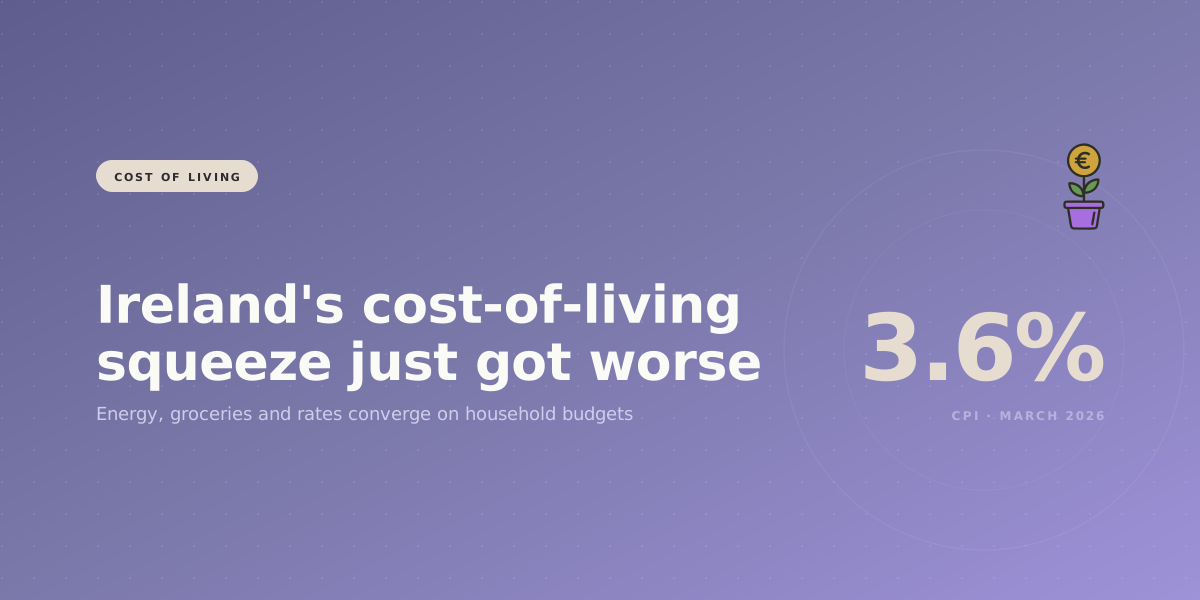
The CSO's flash estimate for March 2026 put annual inflation at 3.6%, up sharply from 2.5% in February. That's the highest reading since late 2023, and it caught many economists off guard. Inflation had been expected to ease. Instead, a combination of global conflict, rising energy costs, and stubborn grocery prices has pushed it back up.
Here's what's driving the squeeze, what the experts are warning, and what you can do about it.
Why are energy prices surging?
The single biggest factor behind March's inflation spike is energy. Energy prices surged 11.1% in one month alone, driven by the fallout from Iran's disruption of the Strait of Hormuz, a narrow waterway that carries roughly 20% of the world's oil supply.
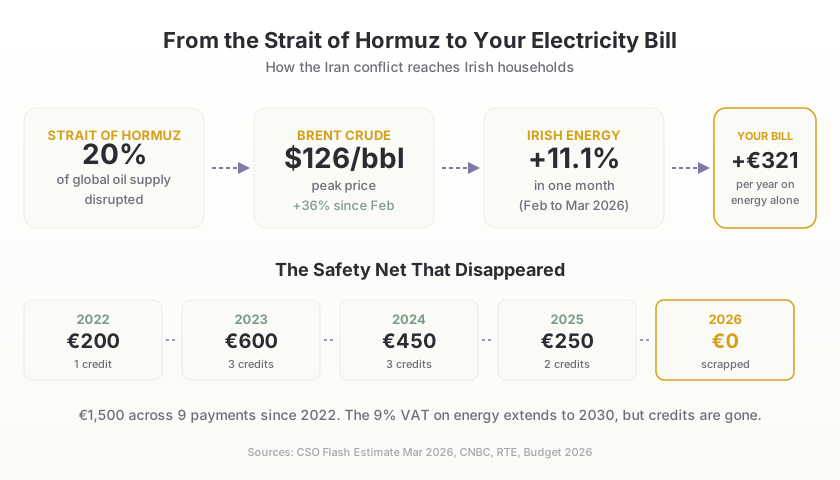
Brent crude surged past $126 per barrel at its peak, the highest since 2022. By late March it was still above $107. That feeds directly into what Irish households pay for petrol, home heating, and electricity. The average annual electricity bill now sits at €1,817, with a further €321 per year increase expected in total energy costs according to the National Energy Affordability Task Force.
The universal electricity credits, nine payments totalling €1,500 since 2022, have also ended. Budget 2026 replaced them with more targeted supports. The reduced 9% VAT on energy bills was extended to 2030, which softens the bill, but the underlying prices keep climbing.
Why are grocery bills climbing too?
Energy isn't the only pressure point. Grocery inflation hit 6.8% for the 12 weeks to late February, according to Kantar data, the fastest rise in two years and well above the headline CPI figure.
The connection between energy and food is direct. About a fifth of the world's fertiliser is produced in the Middle East, and roughly a third of traded fertiliser passes through the Strait of Hormuz. Irish fertiliser prices had already risen 11.6% in the year to January. Since the conflict escalated, some have jumped 60% in weeks. Green diesel, essential for farm machinery, leapt from €0.98 to €1.50 per litre.
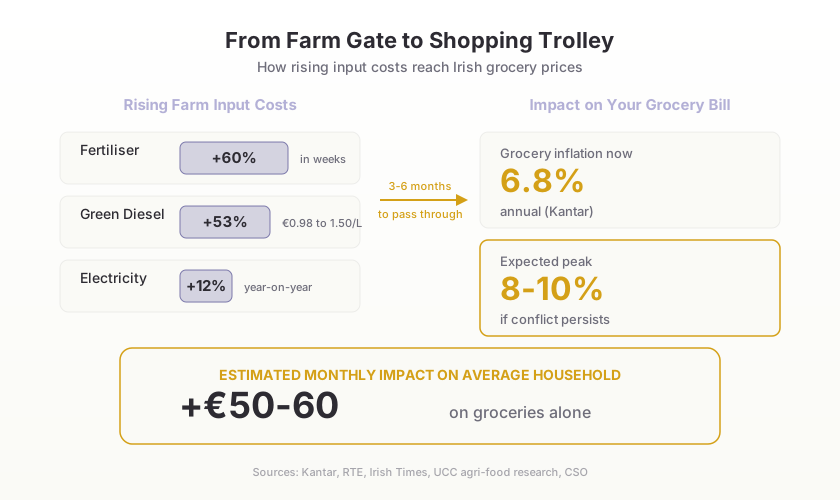
Damian O'Reilly, a retail management lecturer at TU Dublin, warned that grocery inflation could reach 8-10%, adding roughly €50 to €60 per month to the average household's food bill. Thia Hennessy, an agri-food economist at UCC, noted the impact on retail prices could take three to six months to fully materialise, based on the pattern seen during the Ukraine war.
Kilkenny farmer James Drea put it bluntly: "We'll just have to try to weather the storm, but profits are going to be non-existent." Farmers are price takers, not price makers. When their input costs double, the bill eventually lands on the consumer.
What do the numbers show?
The compounding effects of energy, food, and general inflation create a picture that's hard to ignore.
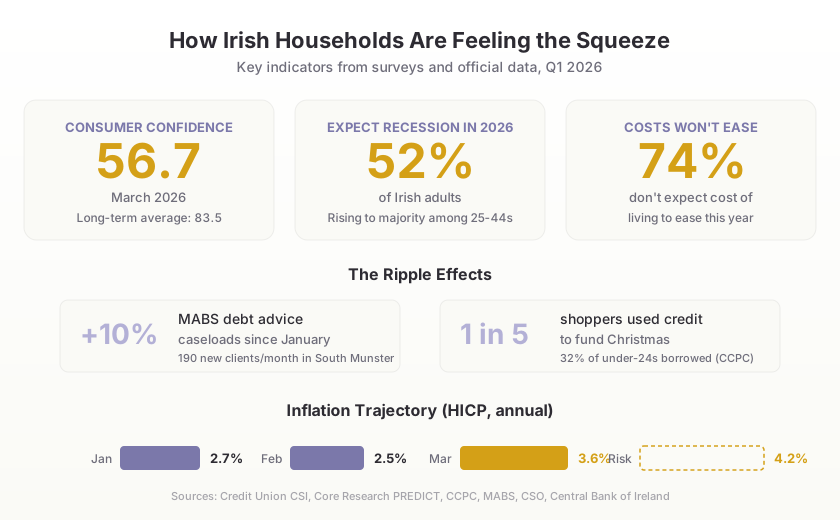
Consumer confidence has taken a battering. The Credit Union Consumer Sentiment Index fell to 56.7 in March, down from 65.2 in February and the lowest reading since March 2023. Economist Austin Hughes noted that buying plans were "the weakest survey element," suggesting households are preparing to cut back hard.
A Core Research survey found that 52% of adults expect Ireland to enter recession in 2026, with 74% not expecting the cost of living to ease. One in five shoppers funded their Christmas spending through credit, according to the CCPC.
The Money Advice and Budgeting Service (MABS) in South Munster reported a 10% rise in caseloads since the start of the year. Regional manager Ursula Collins said: "That's not just a number — it reflects hundreds of households facing choices between heating, rent, food or mortgage payments."
Could interest rates add to the pressure?
Mortgages are the next pressure point.
Financial markets are now pricing in two to three ECB rate hikes in 2026, a sharp reversal from late 2025, when cuts were the expectation. Investment bank Nomura estimates that if Brent crude stays near $100, the ECB will raise rates by 0.25% in both June and September. If things worsen and oil hits $150, three hikes totalling 0.75 points could follow.
For Ireland's approximately 175,000 variable-rate mortgage holders, the impact would be felt quickly. The Irish Times reports that while major lenders have so far held off passing on increases, they may begin catching up within the next six months.
The Central Bank of Ireland's baseline inflation forecast sits at 2.9% for 2026. But in a severe scenario (prolonged supply disruption with oil averaging $120 a barrel) they project inflation hitting 4.2%, with unemployment rising above 5%.
What can you actually do?
The macro picture is challenging. But at the household level, there are concrete steps worth taking.
Track where your money goes. You can't cut what you can't see. Budgeting apps (like Cozzy) connect to your bank accounts and categorise your spending automatically. Most people who start tracking discover at least one subscription or recurring charge they'd forgotten about.
Switch energy provider. The CRU's price comparison tool shows significant differences between suppliers. Even with rising wholesale costs, switching can save €200-400 per year. Lock in a fixed-rate plan if your current deal is expiring.
Shop smarter on groceries. Kantar data shows own-label products now hold 44.6% of the Irish grocery market. Switching from branded to own-label on staples can cut your food bill by 20-30% without a noticeable quality drop. Meal planning and reducing food waste stretch your budget further.
Review your mortgage. If you're on a variable rate, now is the time to talk to a broker about fixing. Competitive fixed rates still sit between 3-3.5%, well below where variable rates could end up if ECB hikes land.
Build an emergency buffer. Even a small one. MABS data shows that households without savings are the ones ending up in crisis. Start with a target of one month's essential expenses and build from there.
What happens next?
The Central Bank chose the word "resilience" repeatedly in its March quarterly bulletin. Ireland's economy is still growing. Employment is near record levels. To be fair to the optimists, those fundamentals matter: a strong labour market gives households more room to absorb price shocks than in past squeezes.
The next few months are pivotal. If the Strait of Hormuz reopens and oil retreats below $90, much of this pressure eases. If it doesn't, the Central Bank's 4.2% inflation scenario becomes the baseline, not the stress test.
Either way, the practical response is the same: know what you spend, trim where you can, and build a buffer while you can. Those steps work regardless of which scenario plays out.
Cozzy helps you track your spending and see exactly where rising prices are hitting your budget. Try it free at cozzy.io.